
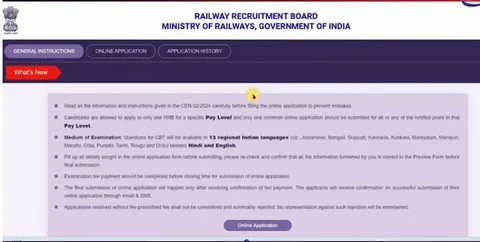
Railway Recruitment Board Technician recruitment is an important opportunity for candidates with technical qualifications who want to build a career with Indian Railways. Technician positions are associated with the maintenance, inspection, repair, and operation of railway equipment and systems.
For candidates searching for RRB Technician 2026, understanding the eligibility requirements, educational qualifications, age limit, vacancy information, examination pattern, syllabus, selection process, and application procedure is essential.
Railway recruitment details can change between recruitment cycles. Candidates should therefore verify the latest official notification before applying.
What Is RRB Technician Recruitment?
RRB Technician recruitment is conducted to select candidates for technical positions within Indian Railways.
Technicians can work in different railway departments depending on their post and technical specialization.
Their responsibilities may involve maintaining railway equipment, inspecting machinery, identifying technical problems, carrying out repairs, and supporting safe railway operations.
The exact duties depend on the technician category and department.
RRB Technician 2026 Eligibility
Educational qualification depends on the technician post.
Candidates may need qualifications such as:
- Class 10
- ITI
- Diploma
- Engineering qualification
- Other approved technical credentials
The accepted trades and disciplines can differ between technician categories.
Candidates should carefully read the official notification to determine whether their ITI trade, diploma, or engineering qualification is accepted.
Age Limit
The age limit varies according to the recruitment notification and technician category.
Candidates should check the minimum and maximum age mentioned in the official advertisement.
Age relaxation may be available to eligible candidates according to applicable government rules.
The date used to calculate age is also important.
RRB Technician Vacancy
Railway technician vacancies can vary significantly from one recruitment cycle to another.
The official notification generally provides:
- Total vacancies
- Post-wise vacancies
- Railway zone-wise vacancies
- Category-wise vacancies
- Reservation details
Vacancy numbers can sometimes be revised.
Candidates should therefore use the latest official notification when checking current vacancies.
RRB Technician Exam Pattern
The recruitment process can include a computer-based examination followed by document verification and medical examination.
The exact stages depend on the technician category.
The computer-based examination can cover areas such as:
- Mathematics
- General Intelligence and Reasoning
- General Science
- General Awareness
- Technical subjects
Candidates should verify the current examination pattern before starting preparation.
Mathematics Syllabus
The mathematics section can include:
- Number system
- Decimals
- Fractions
- Ratio and proportion
- Percentage
- Profit and loss
- Simple and compound interest
- Time and work
- Time and distance
- Algebra
- Geometry
- Mensuration
- Statistics
Candidates should practise regularly because calculation speed can make a major difference during a timed examination.
Reasoning Syllabus
Reasoning questions can test logical and analytical ability.
Topics may include:
- Analogies
- Coding and decoding
- Number series
- Alphabet series
- Classification
- Directions
- Relationships
- Syllogism
- Venn diagrams
- Data interpretation
- Analytical reasoning
Regular practice with previous-year questions can help candidates become familiar with common question patterns.
General Science
Candidates may need knowledge of basic science, particularly physics, chemistry, and biology.
Technical candidates should not completely ignore general science simply because they have a technical qualification.
Regular revision of basic concepts can help improve performance.
Technical Subjects
Technical knowledge is an important part of technician recruitment.
The technical syllabus depends on the particular trade or discipline.
Candidates should study the relevant ITI, diploma, or engineering syllabus and compare it with the official RRB syllabus.
Topics can include electrical systems, mechanical concepts, electronics, computer-related subjects, instrumentation, or other technical areas depending on the post.
Selection Process
The selection process varies according to the recruitment.
Possible stages include:
- Computer-Based Test
- Document Verification
- Medical Examination
Additional stages may apply depending on the specific technician category.
Candidates should read the official notification carefully to understand the complete process.
Medical Examination
Medical fitness can be an important requirement for railway technician positions.
Candidates must satisfy the medical standards applicable to their particular post.
The medical category may depend on the nature of the job and its safety responsibilities.
Applicants should therefore check the relevant medical requirements before applying.
How to Apply Online
When recruitment opens, candidates can generally apply through the authorized RRB recruitment portal.
The basic process is:
- Read the official notification.
- Confirm educational eligibility.
- Check the age limit.
- Register on the official portal.
- Complete the application form.
- Upload required documents.
- Pay the application fee if applicable.
- Review all details.
- Submit the form.
- Save the final application.
Candidates should avoid waiting until the final day.
Documents Required
Applicants may need:
- Class 10 certificate
- ITI certificate
- Diploma certificate
- Engineering certificate, where applicable
- Marksheets
- Identity proof
- Photograph
- Signature
- Category certificate
- Other documents specified in the notification
Documents should be uploaded according to the required file size and format.
How to Prepare for RRB Technician
Begin with the official syllabus.
Divide your preparation into general and technical sections.
Spend sufficient time on technical subjects because they can be important for technician recruitment.
Practise mathematics and reasoning regularly.
Read general awareness and current affairs consistently.
Previous-year question papers are useful for understanding question styles and difficulty.
Mock tests can help improve speed and accuracy.
Common Mistakes
Candidates should avoid:
- Applying without checking their technical qualification.
- Ignoring the official syllabus.
- Relying on outdated vacancy information.
- Neglecting technical subjects.
- Uploading incorrect documents.
- Waiting until the last application date.
- Ignoring medical requirements.
- Trusting unofficial recruitment promises.
Final Words
RRB Technician 2026 can provide an excellent opportunity for candidates with suitable technical qualifications who want to work with Indian Railways.
The exact qualification, vacancies, age limit, syllabus, examination pattern, and selection process depend on the recruitment notification.
Candidates should carefully verify their ITI, diploma, or engineering eligibility before applying.
Prepare systematically, practise previous-year questions, strengthen technical knowledge, and follow official railway updates for RRB Technician Recruitment, Admit Card, Answer Key, Result, Cutoff, Exam Date, and Selection Process.
12. Latest Bank Jobs 2026
Latest Bank Jobs 2026: SBI, IBPS and Other Banking Vacancies
Banking jobs are among the most popular career choices for graduates and candidates preparing for competitive government examinations. Public-sector banks recruit candidates for clerical, officer, specialist, and other positions through different recruitment processes.
For candidates searching for Latest Bank Jobs 2026, understanding the major recruitment examinations, eligibility requirements, selection process, syllabus, salary, and preparation strategy can make the job search easier.
Banking recruitment takes place through different organizations and individual banks. Recruitment schedules, vacancies, eligibility criteria, and examination patterns can change each year, so candidates should verify the latest official notification before applying.
Why Bank Jobs Are Popular
Banking careers can provide candidates with structured employment, opportunities for career progression, professional development, and various employee benefits according to applicable rules.
Public-sector banking jobs are particularly attractive to graduates because many major recruitment examinations accept candidates from different academic backgrounds.
Some positions also provide opportunities for candidates interested in finance, customer service, administration, technology, and management.
Major Banking Recruitment Exams
Candidates searching for bank jobs should monitor several major recruitment categories.
SBI Recruitment
State Bank of India conducts recruitment for different positions.
Depending on the recruitment cycle, candidates may find opportunities for:
- Probationary Officers
- Clerks
- Specialist positions
- Other banking roles
Each position has its own eligibility and selection process.
IBPS Recruitment
The Institute of Banking Personnel Selection conducts recruitment examinations for participating public-sector banks.
Major examination categories can include:
- IBPS PO
- IBPS Clerk
- IBPS Specialist Officer
- IBPS Regional Rural Bank recruitment
The eligibility requirements differ according to the examination.
Bank Jobs for Graduates
Graduation is a common educational requirement for many banking recruitment examinations.
Candidates from different academic backgrounds may be eligible for general banking positions, while specialist roles can require specific degrees.
Before applying, candidates should check:
- Degree requirement
- Age limit
- Nationality
- Required percentage
- Computer knowledge
- Other conditions
Bank Clerk Jobs
Clerical positions are popular among candidates looking for entry-level banking careers.
The job can involve customer service, account-related work, documentation, cash-related responsibilities, and other banking operations.
Selection commonly involves an online examination and, depending on the recruitment, additional stages.
Candidates preparing for clerical recruitment should focus on reasoning, numerical ability, English, general awareness, and computer knowledge where applicable.
Probationary Officer Jobs
Probationary Officer recruitment is generally aimed at graduate candidates.
The role can involve banking operations, customer service, administration, financial products, and supervisory responsibilities.
The recruitment process can include preliminary and main examinations followed by an interview or other assessment, depending on the organization.
Candidates should prepare thoroughly because PO examinations can be highly competitive.
Banking Exam Syllabus
Banking examinations commonly test several subjects.
Reasoning Ability
Topics can include:
- Puzzles
- Seating arrangements
- Coding-decoding
- Syllogism
- Inequality
- Blood relations
- Directions
- Data sufficiency
- Logical reasoning
Quantitative Aptitude
Candidates may need to study:
- Percentage
- Ratio
- Average
- Profit and loss
- Simple and compound interest
- Time and work
- Time and distance
- Data interpretation
- Number series
- Simplification
English Language
Topics can include:
- Reading comprehension
- Grammar
- Vocabulary
- Sentence correction
- Cloze tests
- Para jumbles
General Awareness
Candidates should follow current affairs and banking-related developments.
Important areas include:
- Banking awareness
- Economy
- Financial institutions
- Government schemes
- National events
- International events
- Awards
- Sports
Bank Job Selection Process
The selection process varies.
It may include:
- Preliminary examination
- Main examination
- Interview
- Language test
- Document verification
- Medical or other formalities
Not every recruitment uses every stage.
Candidates should follow the specific notification.
How to Apply for Bank Jobs
Most banking applications are submitted online.
Candidates should:
- Find the official recruitment notification.
- Read the eligibility requirements.
- Register on the official website.
- Complete the application.
- Upload documents.
- Pay the required fee.
- Review the form.
- Submit the application.
- Save the confirmation page.
Applicants should use official recruitment websites rather than unofficial links.
Documents Required
Common documents include:
- Graduation certificate
- Marksheets
- Class 10 certificate
- Identity proof
- Photograph
- Signature
- Category certificate, where applicable
- Other documents mentioned in the notification
Bank Exam Preparation Strategy
Banking examinations are strongly time-oriented.
Candidates should practise solving questions quickly without sacrificing accuracy.
Start with the basics and gradually increase difficulty.
Mock tests should be taken regularly.
After each mock test, identify questions that consumed too much time.
Improving weak areas can be more valuable than simply taking one test after another.
Common Mistakes
Candidates should avoid:
- Ignoring current affairs.
- Failing to practise mock tests.
- Spending too much time on difficult questions.
- Applying without checking eligibility.
- Using unofficial recruitment websites.
- Waiting until the deadline.
- Neglecting banking awareness.
Conclusion
Latest Bank Jobs 2026 can provide opportunities for graduates and other eligible candidates through SBI, IBPS, Regional Rural Banks, and other banking organizations.
Popular recruitment categories include clerical positions, Probationary Officers, Specialist Officers, and other banking roles.
Because every recruitment has different requirements, candidates should verify eligibility, vacancies, application dates, examination patterns, and selection stages through the official notification.
Begin preparation early, practise reasoning and quantitative aptitude regularly, improve English skills, and stay updated with current affairs.
Keep checking for Bank Recruitment 2026, SBI Jobs, IBPS Jobs, Exam Dates, Admit Cards, Answer Keys, Results, Cutoffs, and Selection Process.
13. IBPS PO 2026
IBPS PO 2026: Eligibility, Syllabus, Exam Pattern and Preparation Strategy
The IBPS Probationary Officer examination is one of the major banking recruitment opportunities for graduates in India. It provides eligible candidates with an opportunity to compete for officer-level positions in participating public-sector banks.
For candidates preparing for IBPS PO 2026, understanding eligibility, examination stages, syllabus, selection process, application procedure, and preparation strategy is important.
IBPS recruitment details can change between examination cycles. Candidates should therefore check the latest official notification before applying.
What Is IBPS PO?
IBPS PO stands for Institute of Banking Personnel Selection Probationary Officer.
The recruitment process is designed to select candidates for officer-level banking positions in participating organizations.
A Probationary Officer can handle various banking responsibilities, including customer service, account operations, administrative duties, financial products, loan-related activities, and other banking functions.
The exact responsibilities can vary according to the bank and posting.
IBPS PO Eligibility
Candidates generally need a bachelor’s degree from a recognized university or an equivalent qualification accepted under the recruitment rules.
Candidates from different academic disciplines may be eligible for the general PO recruitment, subject to the conditions stated in the official notification.
Applicants should also check:
- Age limit
- Nationality
- Computer knowledge requirements
- Other eligibility conditions
Age Limit
The official notification specifies the minimum and maximum age.
Eligible categories may receive age relaxation according to applicable rules.
Candidates should check the date used for calculating age because it can determine whether an applicant qualifies.
IBPS PO Exam Pattern
The selection process generally consists of multiple stages.
These can include:
- Preliminary examination
- Main examination
- Interview
The exact structure should be confirmed from the current official notification.
Preliminary Examination
The preliminary examination generally assesses candidates in areas such as:
- English Language
- Quantitative Aptitude
- Reasoning Ability
Candidates need to qualify according to the applicable rules to progress to the next stage.
Time management is particularly important.
Main Examination
The main examination can include areas such as:
- Reasoning
- Computer aptitude
- English
- Data analysis
- General awareness
- Banking awareness
The exact sections and marks should be checked in the current notification.
IBPS PO Syllabus
Reasoning
Important topics include:
- Puzzles
- Seating arrangement
- Syllogism
- Inequality
- Coding-decoding
- Blood relations
- Direction sense
- Logical reasoning
- Data sufficiency
Quantitative Aptitude
Candidates should study:
- Percentage
- Average
- Ratio
- Profit and loss
- Time and work
- Time and distance
- Simple and compound interest
- Number series
- Data interpretation
- Simplification
English
English preparation can include:
- Reading comprehension
- Grammar
- Vocabulary
- Sentence correction
- Cloze test
- Para jumbles
General and Banking Awareness
Candidates should follow:
- Banking news
- Financial developments
- Economic updates
- Government schemes
- Important appointments
- National events
- International events
- Awards and sports
IBPS PO Selection Process
Candidates must clear the required examination stages.
Those who qualify the preliminary examination can proceed to the main examination.
Candidates who meet the applicable main-examination requirements may then be called for an interview or other final selection stage according to the recruitment rules.
Final selection is based on the applicable recruitment criteria.
How to Apply for IBPS PO
Candidates should apply online through the official recruitment portal when the application window opens.
The general process is:
Step 1: Read the official notification.
Step 2: Confirm eligibility.
Step 3: Register online.
Step 4: Enter personal and educational information.
Step 5: Upload the required photograph and signature.
Step 6: Submit other required documents.
Step 7: Pay the application fee.
Step 8: Review the application.
Step 9: Submit the form.
Step 10: Save the confirmation page.
Documents Required
Candidates should generally keep:
- Graduation certificate
- Graduation marksheets
- Class 10 certificate
- Identity proof
- Photograph
- Signature
- Category certificate, if applicable
- Other documents specified by IBPS
IBPS PO Preparation Strategy
Preparation should begin with the official syllabus.
Divide your preparation into three major areas: reasoning, quantitative aptitude, and English for the preliminary examination.
For the main examination, add general awareness, banking awareness, and other applicable sections.
Candidates should practise questions every day.
Mock tests are essential because the examination is time-sensitive.
After each mock test, review incorrect answers and determine why mistakes occurred.
Current Affairs Preparation
Banking examinations require candidates to stay informed.
Read reliable news sources regularly and create short revision notes.
Focus on banking, finance, economics, government programs, appointments, awards, and major national and international events.
Do not attempt to memorize every piece of news.
Focus on information likely to be relevant to the examination.
Common IBPS PO Mistakes
Candidates should avoid:
- Studying without a timetable.
- Ignoring mock tests.
- Neglecting general awareness.
- Spending too long on individual questions.
- Ignoring weak subjects.
- Waiting until the final month to begin preparation.
- Applying without checking the official eligibility requirements.
Final Words
IBPS PO 2026 is a major banking recruitment opportunity for eligible graduates.
Candidates should prepare systematically for the preliminary and main examinations while keeping up with banking and current affairs.
Before applying, always verify the latest IBPS PO Eligibility, Vacancy, Application Dates, Exam Pattern, Syllabus, Admit Card, Result, Cutoff, and Selection Process through the official recruitment notification.
Consistent practice, strong time management, and regular revision can help candidates approach the examination with greater confidence.
14. SBI Clerk 2026
SBI Clerk 2026: Eligibility, Salary, Exam Pattern and Application Process
The State Bank of India Clerk recruitment is one of the most popular banking opportunities for candidates seeking an entry-level position in the public-sector banking sector. The recruitment is generally associated with Junior Associate positions and attracts applicants from across India.
For candidates searching for SBI Clerk 2026, understanding the eligibility requirements, examination pattern, syllabus, selection process, salary, and application procedure is essential.
Recruitment details can change from one examination cycle to another. Candidates should always verify the latest official SBI notification before applying.
What Is SBI Clerk Recruitment?
SBI Clerk recruitment is conducted for Junior Associate positions in State Bank of India.
Junior Associates generally work in customer-facing and clerical banking functions.
Responsibilities can include:
- Customer assistance
- Account-related services
- Documentation
- Cash-related work
- Data entry
- Banking transactions
- Administrative support
The exact responsibilities depend on the branch and work assignment.
SBI Clerk 2026 Eligibility
Candidates generally need a bachelor’s degree from a recognized university or an equivalent qualification accepted by SBI.
The exact eligibility conditions should be confirmed in the latest recruitment notification.
Candidates may also need to meet requirements concerning:
- Age
- Nationality
- Local language
- Other conditions specified by SBI
Age Limit
The official notification specifies the minimum and maximum age.
Age relaxation may apply to eligible categories according to applicable government rules.
Candidates should check the official age calculation date before applying.
SBI Clerk Exam Pattern
The recruitment process can involve:
- Preliminary examination
- Main examination
- Local language-related requirements or testing where applicable
Candidates should check the latest notification for the exact examination structure.
Preliminary Examination
The preliminary examination generally tests:
- English Language
- Numerical Ability
- Reasoning Ability
Candidates must manage their time carefully because the sections are generally completed within defined time limits.
Main Examination
The main examination can cover:
- General or financial awareness
- General English
- Quantitative aptitude
- Reasoning ability
- Computer aptitude
The exact number of questions, marks, and duration should be checked in the official notification.
SBI Clerk Syllabus
Numerical Ability
Important topics include:
- Simplification
- Number series
- Percentage
- Ratio
- Average
- Profit and loss
- Time and work
- Time and distance
- Interest
- Data interpretation
Reasoning
Topics can include:
- Puzzles
- Seating arrangement
- Coding-decoding
- Syllogism
- Inequality
- Blood relations
- Direction
- Logical reasoning
English Language
Candidates should practise:
- Reading comprehension
- Vocabulary
- Grammar
- Sentence correction
- Cloze tests
- Para jumbles
General and Financial Awareness
Preparation should cover:
- Banking awareness
- Financial institutions
- Current affairs
- Government schemes
- Economic developments
- Important appointments
- National and international events
SBI Clerk Salary
The salary for Junior Associate positions follows the applicable SBI pay structure.
Employees may receive basic pay along with applicable allowances and benefits.
The actual salary can vary depending on factors such as posting location and applicable allowances.
Candidates should refer to the official recruitment notification for the current salary and pay details rather than relying on old figures found online.
SBI Clerk Selection Process
Candidates generally have to qualify in the required examination stages.
The preliminary examination is used to shortlist candidates for the main examination.
Candidates who meet the applicable requirements in the main examination can proceed according to the final recruitment process.
Local language requirements may also apply depending on the recruitment and state or region selected.
How to Apply for SBI Clerk 2026
When recruitment opens, candidates should apply through the official SBI recruitment portal.
The process generally includes:
- Read the official notification.
- Check eligibility.
- Register online.
- Complete personal and educational details.
- Upload photograph and signature.
- Upload other required documents.
- Pay the application fee if applicable.
- Review the form.
- Submit the application.
- Save the confirmation page.
Documents Required
Applicants should keep documents such as:
- Graduation certificate
- Graduation marksheets
- Class 10 certificate
- Identity proof
- Photograph
- Signature
- Category certificate
- Other required documents
How to Prepare for SBI Clerk
Candidates should first understand the examination pattern.
Begin with basic concepts in mathematics, reasoning, and English.
Once the fundamentals are strong, start solving timed questions.
Mock tests should become part of regular preparation.
Candidates should review their performance after every mock test.
Identify whether mistakes are caused by lack of knowledge, calculation errors, misunderstanding, or poor time management.
Importance of Local Language
Candidates applying for specific states or circles may need knowledge of the relevant local language.
Language requirements should be checked carefully in the official notification.
Candidates who are not comfortable with the required language should prepare early rather than waiting until the selection stage.
Common Mistakes
Avoid:
- Ignoring the official notification.
- Preparing only one subject.
- Neglecting financial awareness.
- Failing to practise mock tests.
- Spending too much time on difficult questions.
- Ignoring local language requirements.
- Applying without checking eligibility.
Final Words
SBI Clerk 2026 is a popular opportunity for graduates who want to build a career in the banking sector.
Candidates should understand the eligibility requirements, examination pattern, syllabus, selection process, and local language conditions before applying.
Prepare consistently, practise previous questions, take mock tests, and follow current banking and financial developments.
Always verify the latest SBI Clerk Vacancy, Eligibility, Application Dates, Exam Pattern, Syllabus, Admit Card, Result, Cutoff, Salary, and Selection Process through the official SBI recruitment notification.
15. SSC CGL 2026
SSC CGL 2026: Eligibility, Syllabus, Exam Pattern and Selection Process
The Staff Selection Commission Combined Graduate Level examination, commonly called SSC CGL, is one of the most important government recruitment examinations for graduates in India. It provides opportunities for eligible candidates to compete for various Group B and Group C positions in central government departments and organizations.
For candidates searching for SSC CGL 2026, understanding the eligibility criteria, examination pattern, syllabus, selection process, preparation strategy, and application procedure is essential.
SSC recruitment rules and examination details can change between recruitment cycles. Candidates should always check the latest official notification before applying.
What Is SSC CGL?
SSC CGL stands for Staff Selection Commission Combined Graduate Level.
The examination is conducted to recruit candidates for various positions in central government departments and organizations.
Depending on the post, selected candidates may work in areas such as:
- Administration
- Taxation
- Auditing
- Accounts
- Investigation
- Statistics
- Clerical and office administration
- Other government services
The responsibilities, pay level, and eligibility requirements differ according to the position.
SSC CGL 2026 Eligibility
A bachelor’s degree is generally required for many SSC CGL positions.
However, some specific posts may have additional educational requirements.
For example, certain statistical or specialized positions can require particular subjects or qualifications.
Candidates should therefore check the post-wise eligibility requirements in the latest official notification.
Age Limit
Different SSC CGL posts can have different age limits.
Candidates should check the minimum and maximum age specified for their preferred position.
Age relaxation may be available to eligible categories according to applicable government rules.
The official age calculation date should also be checked.
SSC CGL Exam Pattern
The SSC CGL recruitment process involves computer-based examination stages.
The exact structure and applicable stages should be checked in the current official notification.
Candidates may encounter different tiers or examination stages depending on the recruitment rules.
SSC CGL Tier 1
The first stage generally tests candidates in areas such as:
- General Intelligence and Reasoning
- General Awareness
- Quantitative Aptitude
- English Comprehension
Candidates should develop speed because the examination is conducted within a limited time.
SSC CGL Tier 2
The second stage is more detailed and can include different papers or modules depending on the position.
Candidates should check the official syllabus because certain posts may require additional subjects or papers.
The examination can cover mathematics, reasoning, English, general awareness, computer knowledge, data analysis, or other applicable areas.
SSC CGL Syllabus
General Intelligence and Reasoning
Important topics include:
- Analogy
- Classification
- Coding-decoding
- Number series
- Alphabet series
- Syllogism
- Venn diagrams
- Logical reasoning
- Directions
- Relationships
- Problem solving
Quantitative Aptitude
Candidates should study:
- Number system
- Percentage
- Ratio and proportion
- Average
- Profit and loss
- Interest
- Time and work
- Time and distance
- Algebra
- Geometry
- Mensuration
- Trigonometry
- Statistics
- Data interpretation
English Comprehension
Preparation should include:
- Grammar
- Vocabulary
- Reading comprehension
- Sentence correction
- Synonyms and antonyms
- Cloze tests
- Sentence arrangement
General Awareness
Candidates should study:
- Indian history
- Geography
- Indian polity
- Economics
- General science
- Current affairs
- Government programs
- Sports
- Important events
- Books and authors
SSC CGL Selection Process
The selection process depends on the recruitment rules and post.
Candidates must qualify in the applicable examination stages.
After completing the required computer-based examinations, shortlisted candidates may proceed to document verification and other applicable formalities.
Some positions can have additional requirements.
Candidates should therefore read the latest notification carefully.
SSC CGL Application Process
Applications are generally submitted online.
The basic procedure is:
- Read the official notification.
- Check the post-wise eligibility.
- Register on the official SSC portal.
- Complete the application.
- Upload the required documents.
- Pay the application fee if applicable.
- Review the form.
- Submit the application.
- Save the application confirmation.
Applicants should ensure that all information matches their official documents.
Documents Required
Candidates should prepare:
- Graduation certificate
- Graduation marksheets
- Class 10 certificate
- Identity proof
- Photograph
- Signature
- Category certificate, where applicable
- Other documents specified in the notification
SSC CGL Preparation Strategy
Start preparation by downloading the official syllabus.
Divide your study schedule among mathematics, reasoning, English, and general awareness.
Mathematics requires regular practice.
Reasoning improves through repeated question solving.
English requires both grammar knowledge and vocabulary development.
General awareness should be studied consistently.
Previous-year question papers are particularly useful for understanding SSC question patterns.
Mock Tests
Mock tests should be included in preparation.
Start with untimed practice while learning concepts.
Once you become comfortable, begin taking timed tests.
After each test, analyse incorrect answers.
Track repeated mistakes and work specifically on those areas.
Time Management
Time management is one of the most important skills for SSC CGL.
Do not spend excessive time on one difficult question.
Develop a strategy for moving through easy questions first before returning to more challenging ones when the examination format allows.
Regular timed practice can help candidates develop a faster solving rhythm.
Common SSC CGL Mistakes
Candidates should avoid:
- Starting preparation without understanding the syllabus.
- Ignoring mathematics.
- Neglecting English.
- Studying current affairs only before the examination.
- Avoiding mock tests.
- Not reviewing mistakes.
- Applying without checking post-specific eligibility.
- Relying on outdated examination information.
Conclusion
SSC CGL 2026 is a major government recruitment examination for graduates seeking opportunities in central government departments and organizations.
Candidates can compete for different positions involving administration, taxation, accounts, auditing, investigation, statistics, and other government functions.
Because eligibility and examination rules can differ according to the post, candidates should always check the latest official notification.
Start preparation early, study the official syllabus, solve previous-year papers, take regular mock tests, and work on speed and accuracy.
Keep following SSC CGL Recruitment, Vacancy, Exam Date, Admit Card, Answer Key, Result, Cutoff, Syllabus, and Selection Process updates so you can stay informed throughout the recruitment cycle.https://chatgpt.com/backend-api/sentinel/frame.html?sv=20260810913b